Guide
How to cue Pilates so people actually move
Notes for group teachers, plus three PLTS+ sessions that go deeper.
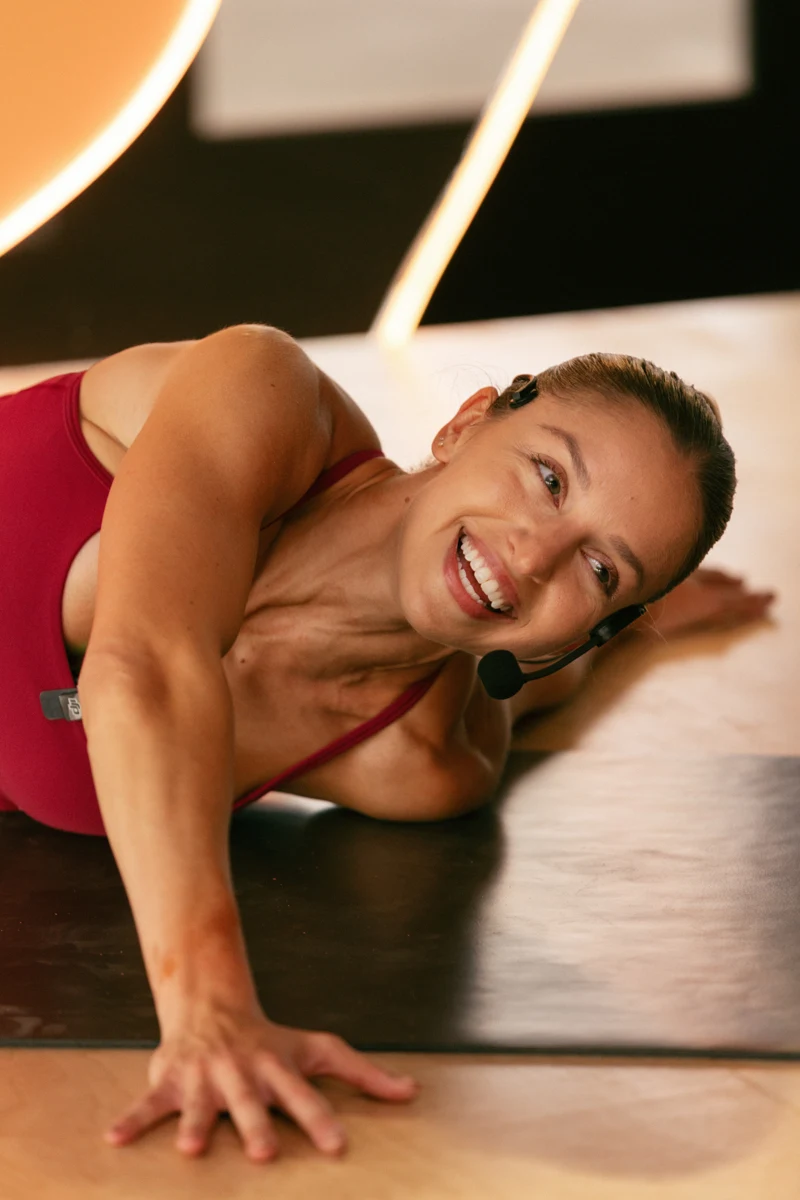
Ask five instructors how to cue Pilates and you'll hear five systems, but the teachers people line up for tend to have one thing in common: they talk less than you'd expect. A cue from them is short, it comes a moment early, and then they stop and watch. Madeleine Conti, in the photo with her headset on, teaches Mat Pilates Fusion at PLTS+ Collective, and a headset mic is a good reminder that every word you say reaches the whole room.
Timing, mostly
Plenty of perfectly good cues fail just because they show up late. By rep three she's settled into whatever she was doing, so a correction then sounds like you're grading her. Said on the preparing breath, the same words land as instructions. Try moving every cue one breath earlier for a week and see what happens to the room.
One correction per person per rep
Three fixes in one sentence rarely produce any of them. When the shoulders are up around the ears and the pelvis is fine, we'd mention the shoulders and leave the pelvis alone for now. It'll still be there next rep.
What to do before what to feel
Tell someone to reach their heels toward the wall and they can do it on the first try. Ask them to feel their lower belly hollow, on the other hand, and some of them will be hunting for something they've never felt. We give the action first. The sensation can come once the shape is there, and in a packed 7 AM class you may never need it.
A demo and a pause
A ten-second demo saves you a paragraph. First-timers need it most, and so does anyone taking class in a second language. Do the middle version, step off, and wait a couple of breaths before adding anything.
Touch
A hand on a shoulder can be the clearest cue there is, and for some people the least welcome, and you won't always know which from where you stand. Ask first, at the start of class or right before, and take a no without any fuss.
Three PLTS+ sessions that dig in
PLTS+ Collective in Austin, November 7 and 8, 2026, has three workshops where cueing is a big part of the content. On Saturday afternoon Dr. Morgan Rodriguez teaches neck and shoulder pain in Pilates, and her description talks about assessing movement and applying targeted cueing, regressions and progressions inside common exercises. On Sunday morning Holly Swanson's session on Pilates breathing technique and posture goes past the inhale-to-prepare count. And at 1:00 on Sunday, Erin Schirack's Beat-Driven Musicality looks at how music changes instructor cueing and class pacing.
Scripting your key cues ahead of time helps, which is why our guide on how to plan a Pilates class suggests writing two or three per block. Still, the best cue usually answers whatever just happened on mat four.
Record yourself once
Teach ten minutes to an empty studio with your phone recording and play it back on the drive home. You'll hear the filler words and the cues that turn up a beat late. It's uncomfortable for about five minutes and useful for months.
Times for all three workshops are on the PLTS+ Collective page.
Questions
How many cues per exercise?
One, now and then two. Pick whichever correction changes the most for that person; the rest can wait.
When should a cue land?
On the preparing breath, just before the movement starts, so people can act on it.
Is hands-on cueing okay?
With permission. Ask first and accept a no.
Learn with STRENGTH Collective
Practical education for the people who lead fitness and wellness, across five series. See what is open now and what is still being confirmed.